How to Spot Real Extra Virgin Olive Oil: 5 Practical Quality Tests
Walk down any supermarket oil aisle, and almost every dark bottle claims to hold "100% Pure Extra Virgin Olive Oil." Yet independent investigations, regulatory checks, and food fraud studies consistently show that a significant portion of commercial olive oil fails to meet authentic extra virgin standards—often diluted with cheaper refined seed oils or low-grade treated lampante oil.
True Extra Virgin Olive Oil (EVOO) is essentially fresh, unrefined fruit juice pressed mechanically without heat or chemicals. To make sure you get the robust flavor and potent antioxidant benefits you pay for, use these five practical tests and labeling rules to spot genuine EVOO every time.
1. The Packaging Check: Dark Glass, Tin, and Harvest Dates
Authentic EVOO degrades rapidly when exposed to its two greatest enemies: light and oxygen.
The Container: High-grade producers never bottle extra virgin olive oil in clear plastic or transparent glass bottles. Look for dark tinted glass (amber or dark green), ceramic bottles, or food-grade tin containers that block UV light.
Harvest Date vs. "Best By" Date: A "Best By" date only tells you when the oil was bottled, which could be months or years after extraction. Authentic producers proudly print the specific Harvest Date (e.g., Harvest: Autumn 2025 or 2025/2026 Crop).
Single-Estate or Traceable Origin: Be wary of broad labels like "Packed in Italy" or "Product of the Mediterranean." This usually means oils from multiple countries were blended in a processing facility. Look for specific regions, cultivars (e.g., Picholine, Arbequina, Koroneiki), or single-estate sources.
2. The Throat "Cough" Test (Polyphenol Verification)
High-quality EVOO is rich in oleocanthal, a natural phenolic compound known for its anti-inflammatory properties. Oleocanthal interacts directly with receptors in the back of the throat, triggering a distinct peppery sting.
How to do the sensory test:
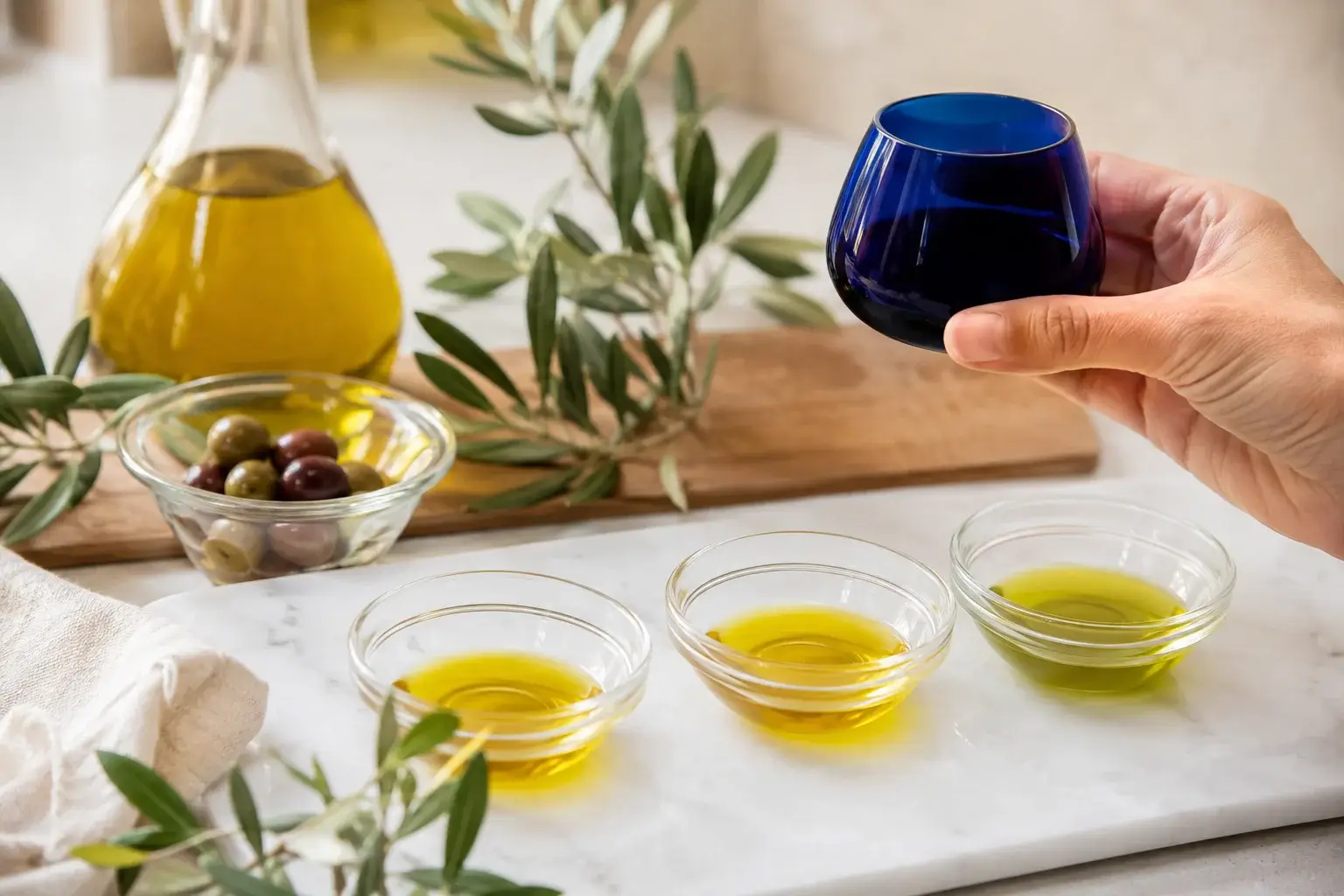
Pour a tablespoon of olive oil into a small cup.
Cup the bottom in your hands for 30 seconds to warm the oil slightly.
Take a sip, coat your tongue, and draw in air through your teeth to aerate the oil across the palate.
Swallow the oil.
What to look for:
Real EVOO: Causes a sharp, peppery prickle or tingling sensation in the back of your throat. Professional olive oil tasters rate oils as "one-cough," "two-cough," or "three-cough" oils based on their phenolic intensity.
Fake or Refined Oil: Feels greasy, flat, and completely smooth on the throat with zero peppery kick.
3. The Aroma Profile: Green Fruit vs. Greasy Neutrality
Fresh extra virgin olive oil smells distinctly agricultural and green. Because real EVOO is extracted purely through mechanical cold extraction without chemical deodorizing, its aromatic volatile compounds remain intact.
| Authentic EVOO Aromas | Signs of Defective / Counterfeit Oil |
| Fresh-cut green grass | Greasy, neutral, or non-existent scent |
| Green tomato leaf | Wax crayon or plastic-like odor (oxidation) |
| Artichoke & green almond | Fermented, vinegary, or winey notes (fusty/muddy sediment) |
| Crisp green apple | Rancid nut or old butter smell (spoiled fats) |
If you open a fresh bottle and detect no aroma at all, you are likely holding refined seed oil or chemically stripped lampante oil.
4. The Chemistry Standard: Free Acidity Below 0.8%
According to the
Why acidity matters: Low acidity indicates that the olives were sound, freshly harvested, and pressed within hours of picking without damage, fermentation, or mold.
Label transparency: Standard industrial blends rarely list their chemical stats on the bottle. Premium brands openly publish their acidity percentage, peroxide values, and total polyphenol counts (measured in mg/kg).
5. Third-Party Certifications & Official Seals
Independent certifications require stringent chemical lab assays and professional organoleptic panel tastings before granting their seal.
Look for these recognized verification marks:
DOP / PDO (Protected Designation of Origin): Guarantees the entire production process—from growing the olives to final bottling—took place in a specific certified geographical region under strict regulatory oversight.
PGI / IGP (Protected Geographical Indication): Signifies that at least one of the production stages took place in the specified region.
National & Regional Seals: Look for regulatory stamps such as the
North American Olive Oil Association (NAOOA) California Olive Oil Council (COOC)
A Myth to Avoid: The "Fridge Test"
A common internet trick claims that placing olive oil in the refrigerator will determine authenticity: if it solidifies, it is real; if it stays liquid, it is fake.
This test is chemically inaccurate.
Olive oil consists primarily of monounsaturated oleic acid, which hardens at cold temperatures, but different olive varieties naturally contain varying fatty acid profiles. Some authentic high-polyunsaturated olive oils remain partially liquid in the fridge, while adulterated oils mixed with cheap saturated fats (like palm oil or tallow) will readily solidify. Rely on aroma, polyphenol bitterness, harvest traceability, and official certification marks instead.